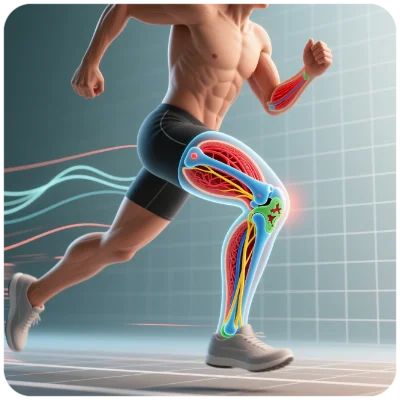
ACL and Meniscus Injuries:
Meniscus Tear & ACL Reconstruction
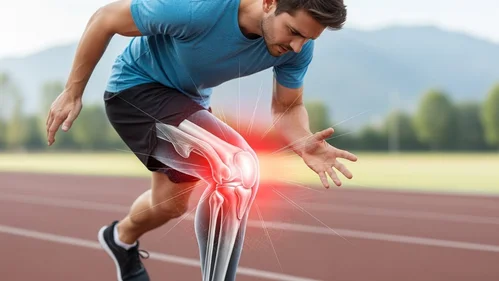
In sports-related injuries, tears of the anterior cruciate ligament (ACL) and meniscus are among the most common knee problems.
If left untreated—especially in young, active individuals—these injuries significantly increase the risk of early-onset osteoarthritis (joint degeneration) later in life.
At our center, we treat both ACL ruptures and meniscus tears using minimally invasive arthroscopic surgery. This “keyhole” technique involves:
- Making 2–3 small incisions (2–3 mm) on either side of the knee,
- Inserting a high-definition camera through one portal,
- Using specialized instruments through the other to repair or reconstruct the damaged structures—all without opening the joint.
This approach offers:
- Less pain and scarring,
- Faster recovery,
- Better preservation of joint function,
- And a quicker return to sports and daily activities.
Early and appropriate treatment is key—not just to restore stability today, but to protect your knee for decades to come.
How Are Meniscus Tears Treated?
The menisci are crescent-shaped cartilage structures located between the femur (thigh bone) and tibia (shin bone) in the knee joint. They serve several important functions:
- Acting as shock absorbers,
- Helping distribute load evenly across the joint,
- Supporting cartilage lubrication and nutrition.
Like skin, meniscal tissue undergoes age-related changes: over time, its water content decreases, making it less elastic and more prone to tearing—even after minor trauma or routine activities, especially in older adults.
Treatment Depends on the Tear’s Location and Type
- Repairable Tears (Meniscus Suturing)
If the tear is:- Located near the outer rim (capsular zone)—where blood supply is better,
- Clean and traumatic (not degenerative),
- And the patient is relatively young,
→ Meniscus repair (suturing) is often possible.
After repair:- Weight-bearing is restricted for about 4 weeks,
- But continuous, active knee motion is essential to prevent stiffness and promote healing.
- Non-Repairable Tears (Partial Meniscectomy)
If the tear is:- In the inner avascular zone (close to the joint center),
- Complex, degenerative, or shredded,
→ Healing potential is very low.
In such cases, we perform a partial meniscectomy: only the damaged, non-functional portion is carefully removed, preserving as much healthy meniscus as possible.Recovery after partial meniscectomy:- Patients can usually walk the next day,
- Full recovery typically takes a few weeks, depending on activity level.
Preserving the meniscus whenever possible is key—because its loss increases the long-term risk of osteoarthritis.
How Is an ACL (Anterior Cruciate Ligament) Injury Treated?
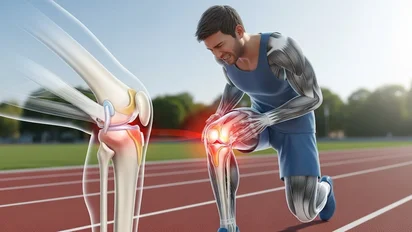 The anterior cruciate ligament (ACL) runs diagonally through the center of the knee—from the inner lower part of the femur to the outer upper part of the tibia. Its main role is to prevent the tibia from sliding too far forward under the femur and to provide rotational stability during cutting, pivoting, and jumping movements.
Patients with an ACL tear often report:
Hearing or feeling a “pop” at the time of injury,
Rapid swelling due to bleeding inside the joint,
Instability or “giving way” when trying to change direction.
Diagnosis is confirmed through physical examination and a knee MRI, which clearly shows the extent of the tear and any associated injuries (like meniscus damage)..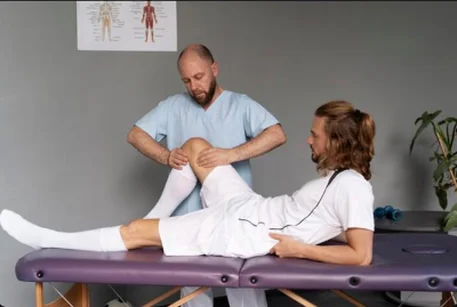
Timing of Surgery
If the patient is not a professional athlete and doesn’t need to return to sports immediately, we typically wait about 3 weeks after the injury. This allows swelling to subside and soft tissues to calm down, reducing the risk of complications like arthrofibrosis (excessive scar tissue).
Graft Options for ACL Reconstruction
We most commonly use the patient’s own hamstring tendons (from the same leg). Other options include:
- Bone-patellar tendon-bone graft (from the kneecap),
- Quadriceps tendon graft,
- Allograft (donor tissue from a tissue bank).
During surgery:
- The torn ACL is visualized and confirmed via arthroscopy (minimally invasive keyhole technique).
- While a surgical technician prepares the graft, the joint is cleaned arthroscopically.
- Any associated meniscus tears are repaired or trimmed as needed.
All-Inside ACL Reconstruction – Our Preferred Technique
I perform the All-Inside ACL reconstruction, one of the most advanced techniques available. Unlike traditional methods, this approach:
- Creates bone tunnels entirely inside the joint,
- Uses special adjustable suspensory fixation devices to secure the graft in a highly anatomical position—mimicking the native ACL as closely as possible.
- Minimizes bone removal and preserves more natural anatomy.
Recovery & Rehabilitation
- Day 1: After drain removal, patients are encouraged to stand and walk with partial weight-bearing.
- First 10 days: Knee flexion is limited to 30 degrees to protect healing.
- Day 10: Physical therapy begins—and it’s critical to success.
⚠️ Important: The new graft is weakest around the 3-month mark. Without strong surrounding muscles (especially hamstrings and quadriceps), it can re-tear just like the original ACL.
That’s why consistent, expert-guided rehabilitation is non-negotiable.
Frequently Asked Question:
“Will I lose strength after harvesting my hamstring tendon?”
No. In the All-Inside technique, we use only one of the three hamstring tendons. Most patients—whether active or not—do not notice any functional weakness in daily life or sports. The remaining tendons fully compensate, and strength returns with proper rehab.
No. In the All-Inside technique, we use only one of the three hamstring tendons. Most patients—whether active or not—do not notice any functional weakness in daily life or sports. The remaining tendons fully compensate, and strength returns with proper rehab.
This approach—combining precision surgery with dedicated rehabilitation—helps patients regain stability, confidence, and long-term joint health.
Surgery Process
- Anesthesia: General anesthesia or spinal (regional) anesthesia is used.
- Duration: The procedure typically takes 60 to 90 minutes.
- Technique: Most ACL reconstructions are performed arthroscopically (minimally invasive “keyhole” surgery).
- Discharge: Patients are usually discharged the same day or the following morning.
Post-Operative Recovery Timeline
Phase 1: Immediate Recovery (First 2 Weeks)
- Apply ice regularly to reduce swelling
- Keep the leg elevated and manage pain as prescribed
- Use crutches or a knee brace for support
- Begin gentle knee motion exercises under the guidance of a physical therapist
Phase 2: Early Rehabilitation (Weeks 3–6)
- Gradually start full weight-bearing on the operated leg
- Begin strengthening exercises for thigh and hip muscles
- Perform balance and proprioception training to improve joint control
Phase 3: Functional Recovery (Months 2–6)
- Return to light jogging and non-impact sports activities
- Focus on targeted strengthening of key muscle groups (quadriceps, hamstrings, glutes)
- Continue coordination and stability drills
Phase 4: Return to Sports (Months 6–12)
- Sport-specific return is planned based on individual progress and clinical evaluation
- Includes controlled jumping, cutting, pivoting, and speed drills
- Clearance is given only when strength, stability, and movement patterns meet safe thresholds
Benefits of ACL Reconstruction
- Restores knee stability during daily and athletic activities
- Eliminates the sensation of the knee “giving way” or buckling
- Enables a safe return to an active lifestyle
- May help slow down or prevent further damage to the meniscus and articular cartilage—reducing long-term risk of osteoarthritis