
Scoliosis: Diagnosis and Treatment Options
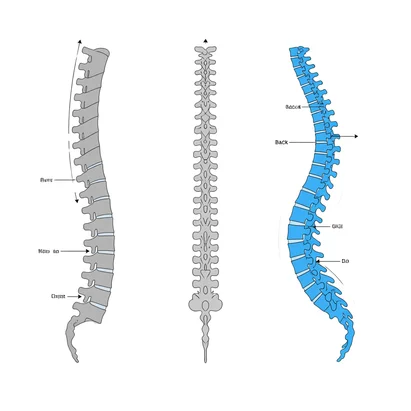
Scoliosis is not simply a sideways curve of the spine—it is a three-dimensional deformity. While the spine normally runs straight from neck to pelvis, in scoliosis it both bends sideways and rotates around its own axis. This combined bending and twisting often results in a visible “C” or “S” shape, especially in moderate to severe cases.
How Is Scoliosis Diagnosed?
Medically, a spinal curve is classified as scoliosis only if it measures at least 10 degrees on an X-ray using the Cobb angle method—the standard way to quantify spinal curvature. Curves below 10 degrees are usually considered postural (related to posture) or compensatory (the body’s natural adjustment) and are often temporary.
For example, a common cause of mild spinal curvature is a leg length discrepancy. In fact, differences of 1–1.5 cm between leg lengths are quite common in the general population. To maintain balance, the body naturally compensates: the hip on the longer-leg side rises slightly, and the spine curves in the opposite direction to keep the head centered over the pelvis.
This type of curvature is typically flexible and reversible—it disappears when posture is corrected (for instance, during the forward-bending test used in school screenings).
Why Early Evaluation Matters—Especially in Adolescents
If a child is still growing, even a small curve requires careful monitoring. During puberty, the spine grows rapidly, and a minor postural curve can quickly progress into true structural scoliosis.
In contrast, adults who have finished growing rarely develop new scoliosis from leg length differences. In these cases, the imbalance can usually be corrected easily with custom shoe inserts or heel lifts, preventing long-term strain on the spine.
Takeaway
Regular spine checks are essential for children and adolescents, especially during growth spurts. If you notice uneven shoulders, a tilted waist, or one hip higher than the other, consult an orthopedic specialist promptly.
With early diagnosis and appropriate follow-up, most scoliosis cases can be managed without surgery—through observation, bracing, or physical therapy tailored to the patient’s growth stage and curve severity.
What Is Scoliosis?
Scoliosis is a three-dimensional deformity of the spine that appears as an “S”-shaped curve when viewed from the front or back. In simple terms, instead of running straight down the back, the spine curves sideways and also rotates—deviating from its normal alignment when viewed from the front, side, and top.
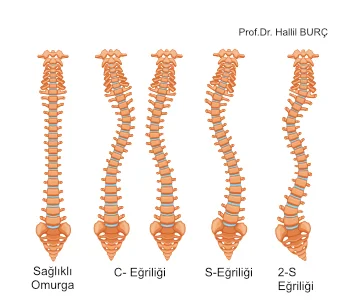
Scoliosis vs. Other Spinal Variations
To be diagnosed as scoliosis, the spinal curvature must measure at least 10 degrees (using the Cobb angle on an X-ray). Curves less than 10 degrees are not considered true scoliosis but rather spinal imbalances or postural asymmetries.
These minor curves are often compensatory—meaning the body naturally adjusts to an underlying issue, such as a leg length discrepancy. In everyday life, differences of 1–1.5 cm between leg lengths are quite common and usually go unnoticed because the spine subtly curves to keep the head and pelvis balanced.
If a person has finished growing, this imbalance can easily be corrected with a custom shoe insert (heel lift), preventing the temporary curve from becoming permanent.
However, in children and adolescents who are still growing, regular monitoring is essential. Until skeletal maturity is confirmed, periodic check-ups help ensure that a mild postural curve doesn’t progress into structural scoliosis.
What Is Scoliosis Treatment?
Treatment decisions for scoliosis depend on several factors: the patient’s age, sex, location of the curve, and curve severity (measured in degrees).
For example, a 10-year-old with a 20-degree thoracolumbar curve requires a different approach than a 20-year-old with the same curve magnitude. The younger patient still has significant growth potential, so close monitoring is essential. In contrast, the adult patient may only need follow-up once every two years, as skeletal growth is complete.
Every case is unique—and treatment plans are personalized. If surgery is being considered, we encourage you to consult with our team to discuss which approach best fits your condition and lifestyle.
Is Surgery Always Needed for Scoliosis?
Absolutely not. For children who are still growing and whose curves are below the surgical threshold (typically under 40–45 degrees), we recommend bracing and Schroth-based exercises—a specialized form of asymmetric physical therapy designed to improve posture and halt progression.
Girls tend to enter puberty earlier than boys, and puberty brings a rapid growth spurt—a period when spinal curves can worsen quickly. During this critical phase, follow-up visits every 3–4 months may be necessary to monitor changes closely.
How Should a Brace Be Used?
Initially, the brace should be worn 23 hours per day. The remaining hour can be used for bathing and personal hygiene. Over time—and especially once growth is complete and the curve is stabilized—the wearing time is gradually reduced and eventually discontinued.
It’s important to know that some curves may still progress despite bracing, and in those cases, surgical treatment may be recommended. This decision is always made individually, based on the patient’s specific curve pattern, growth status, and overall health.
Frequently Asked Questions (FAQ)
Q: What are the signs of scoliosis?
- Uneven shoulders or hips
- A rib hump on one side of the back (especially when bending forward)
- Leaning of the torso to one side
- Back pain (more common in adults)
- In children, scoliosis is usually painless—it’s often noticed through visible asymmetry in posture or clothing fit.
Q: Can scoliosis be detected early in children?
Yes. Early diagnosis is possible through school screenings or parental observation. Parents should check whether their child’s shoulders, waist, or hips appear level. If you notice any imbalance, consult an orthopedic and traumatology specialist promptly.Q: Is scoliosis hereditary?
Yes. Scoliosis often runs in families. If there’s a history of scoliosis in your family, your child should be evaluated by a specialist, even in the absence of symptoms.Skolyoz
"These contents have been prepared by Prof. Dr. Halil Burç based on over 25 years of clinical experience."